
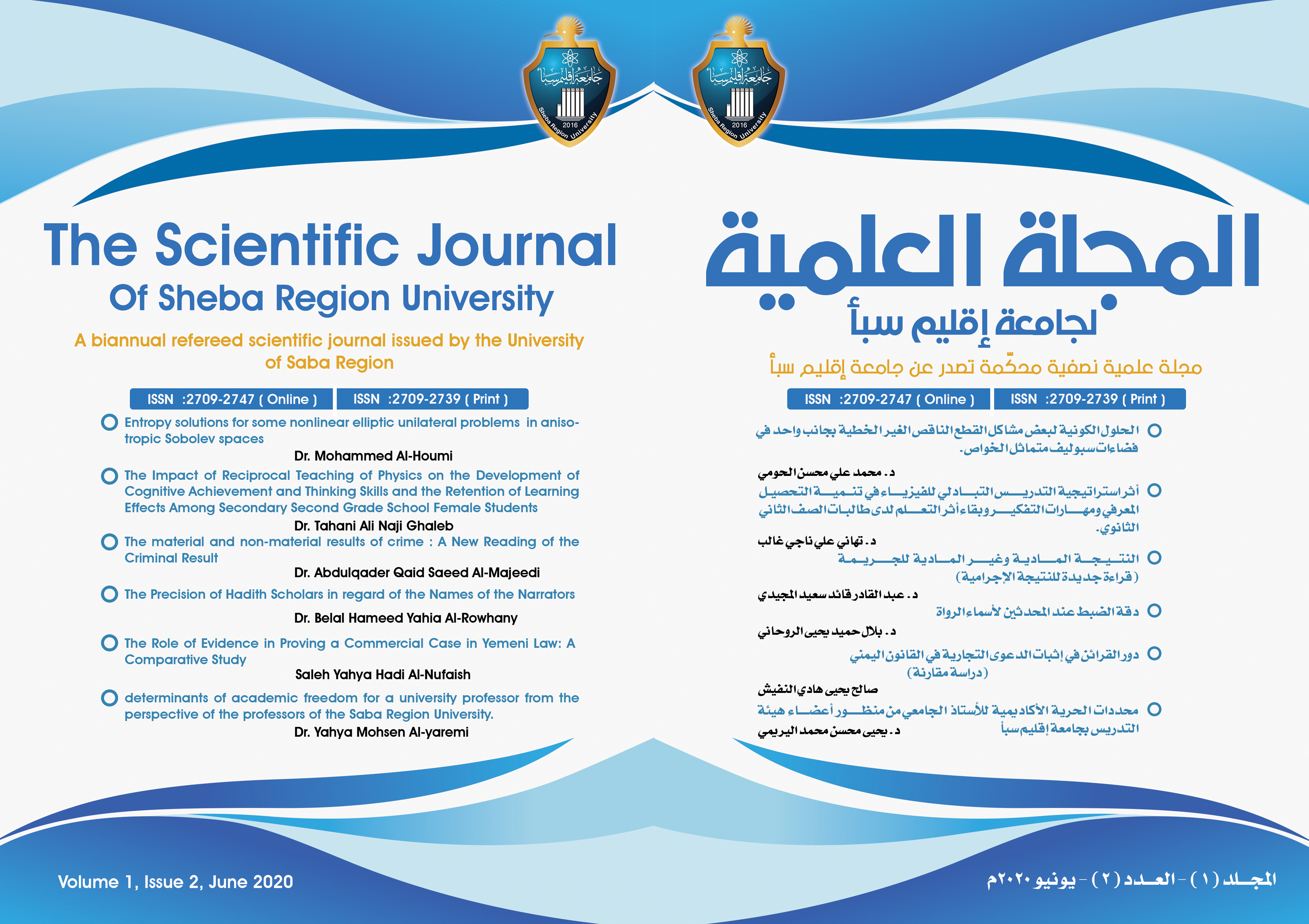
دور القرائن في إثبات الدعوى التجارية في القانون اليمني (دراسة مقارنة)
The Role of Evidence in Proving a Commercial Case in Yemeni Law: A Comparative Study Saleh Yahya Hadi Al-Nufaish
Abstract
وقد اتبع الباحث في هذه الدراسة: المنهج الوصفي التحليلي والمقارن. واحتوت الدراسة على مقدمة وأربعة مباحث، وقد بين الباحث في المقدمة: أهمية البحث في كون الإثبات بالقرائن من طرق ووسائل الإثبات غير المباشرة، والتي لها دور كبير في ارشاد القضاة إلى الحقيقة والصواب في الدعاوى المنظورة أمامهم؛ من خلال استقرائهم واستنباطهم للقرائن من الوقائع في الدعاوى محل النزاع، كما تظهر أهداف البحث في مدى إثبات الدعوى التجارية بالقرائن في القانون، وتناول الباحث في المبحث الأول: تعريف القرائن وحجيتها، وفي المبحث الثاني: العمل بالقرائن في حالة تسلم المرسل إليه والناقل الأمتعة أو البضائع دون تحفظ، وفي المبحث الثالث: العمل بالقرائن في حالة قبول الكمبيالة على وجود مقابل وفائها، وأخيراً تناول الباحث في المبحث الرابع: أمثلة على القرائن في بعض مواد القانون التجاري. وكان أهم ما خرج به الباحث من النتائج أن القرائن دليل مشروع للإثبات في الدعوى المدنية والتجارية، خاصة القرائن الحديثة بما كفله الشرع والقانون. وأما أبرز التوصيات: تفعيل القوانين فيما يخص الإثبات بالقرائن أمام المحاكم الشرعية وأجهزة القضاء، والفصل بين القواعد الموضوعية والقرائن القانونية.
Abstract
This study uses the descriptive, analytical and comparative approach. It includes an introduction and four sections. The introduction shows the significance of the research since it indicates the importance of presumptions as one of the indirect methods of proof that has a great role in guiding judges to the truth in court proceedings. That can be achieved via deduction and deduction of presumptions from the facts in the proceedings in dispute. The introduction also presents the objective of the study. The first section, however, discusses the definition of presumptions and their validity. In the second section, the researcher discusses taking into account presumptions in the case that the consignee and the carrier received the luggage or goods without reservation. The third section discusses taking into account presumptions in the case of accepting bills on the existence of an exchange. Finally, the fourth section presents examples of presumptions in some articles of the commercial law. The most important finding of the study is that presumptions are legitimate evidence in civil and commercial lawsuits, especially modern presumptions guaranteed by Sharia law and common law. The study also recommends activating laws concerning proof by presumptions in Sharia courts and judicial bodies, as well as differentiating between objective rules and legal presumptions.
Downloads
Published
How to Cite
Issue
Section
License
Copyright and Licensing
This journal publishes all scientific materials under the Creative Commons Attribution 4.0 International (CC BY 4.0) , license, which grants you the following permissions:
You are free to:
- Share — copy and redistribute the material in any medium or format for any purpose, even commercially.
- Adapt — remix, transform, and build upon the material for any purpose, even commercially.
- The licensor cannot revoke these freedoms as long as you follow the license terms.
Under the following terms:
- Attribution — You must give appropriate credit , provide a link to the license, and indicate if changes were made . You may do so in any reasonable manner, but not in any way that suggests the licensor endorses you or your use.
- No additional restrictions — You may not apply legal terms or technological measures that legally restrict others from doing anything the license permits.
Notices:
You do not have to comply with the license for elements of the material in the public domain or where your use is permitted by an applicable exception or limitation .
No warranties are given. The license may not give you all of the permissions necessary for your intended use. For example, other rights such as publicity, privacy, or moral rights may limit how you use the material.