
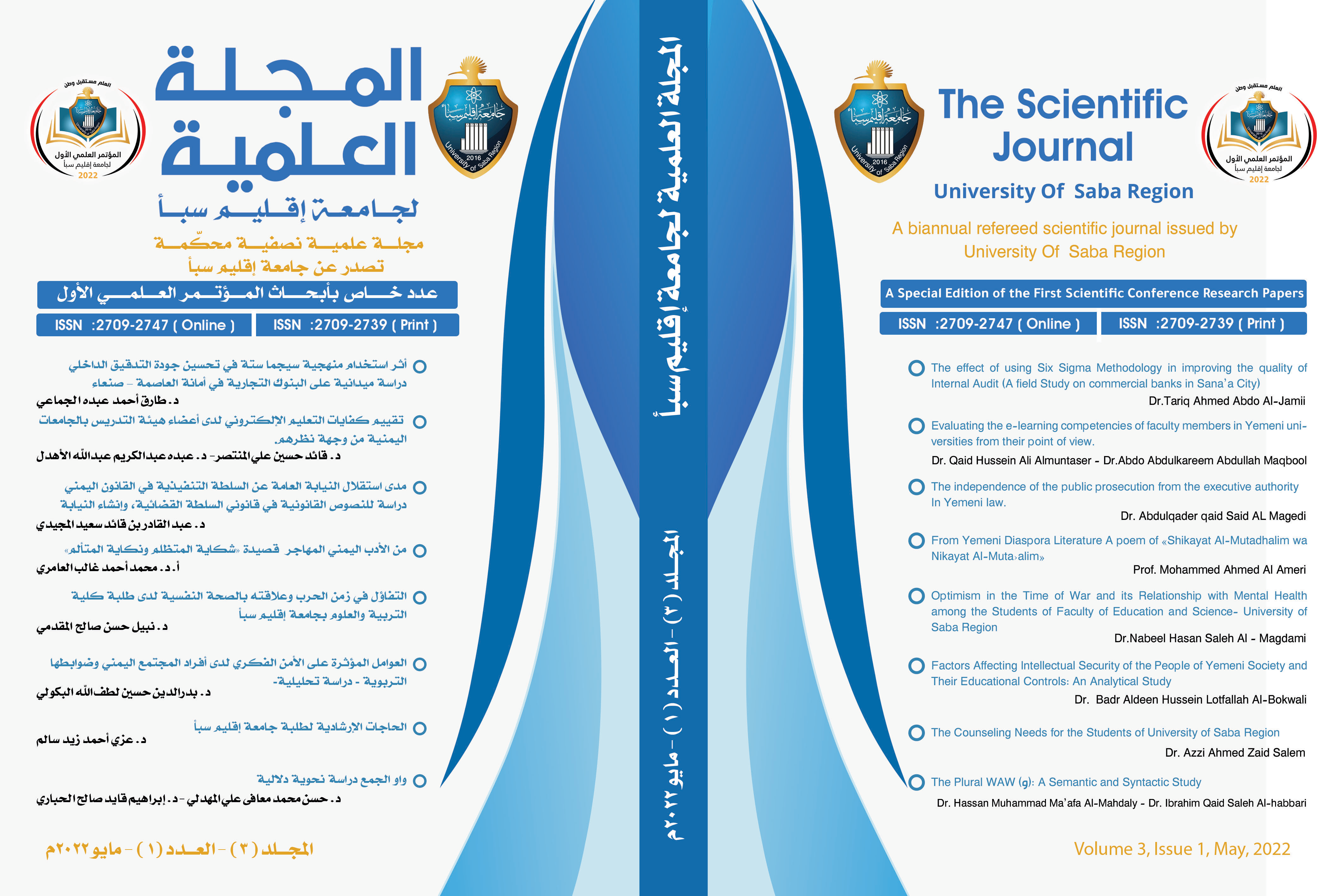
تقييم كفايات التعليم الإلكتروني لدى أعضاء هيئة التدريس بالجامعات اليمنية من وجهة نظرهم.
DOI:
https://doi.org/10.54582/TSJ.2.2.11الكلمات المفتاحية:
كفايات، التعليم الإلكتروني، أعضاء هيئة التدريسالملخص
هدفت هذه الدراسة إلى التعرف على درجة توافر كفايات التعليم الإلكتروني لدى أعضاء هيئة التدريس بجامعتي حضرموت وإقليم سبأ ولتحقيق أهداف الدراسة، استخدم الباحثان المنهج الوصفي المسحي، من خلال استبانة مكونة من (67) فقرة، موزعة على أربعة محاور، طبقت على عينة مكونة من (105)عضوا من أعضاء هيئة التدريس، واستخدمت المتوسطات الحسابية والانحرافات المعيارية، واختبار «ت»، وتحليل التباين الأحادي لتحليل استجابات العينة.
وكشفت نتائج الدراسة أن تقييم مستوى أعضاء هيئة التدريس بجامعتي حضرموت وإقليم سبأ بالجمهورية اليمنية، في كفايات التعليم الإلكتروني جاء كالآتي: في مجال كفايات ثقافة التعليم الإلكتروني ومجال كفايات استخدام الحاسب الآلي وملحقاته، ومجال كفايات الشبكات والإنترنت بدرجة «متوسطة»، في حين جاء تقييمهم، بمجال كفايات تصميم وإدارة التعليم الإلكتروني بدرجة «منخفضة».
ولم تظهر نتائج البحث فروقاً ذات دلالة إحصائية في درجة الكفايات تعزى لمتغير، المؤهل الدراسي، والجنس، وعدد الدورات التدريبية في التعليم الإلكتروني، في حين أظهرت الدراسة فروقًا في محوري استخدام الحاسب الآلي وملحقاته، واستخدام الشبكات والإنترنت تعزى لمتغير سنوات الخبرة في التدريس لصالح الأقل خبرة، كما أظهرت فروقًا ذات دلالة إحصائية لمتغير الكلية في جميع مجالات الأداة ولصالح الكليات العلمية.
وفي ضوء نتائج الدراسة قدَّم الباحثان عددًا من التوصيات والمقترحات، منها الاستفادة من نتائج هذا البحث عند إعداد البرامج التدريبية الخاصة بأعضاء هيئة التدريس في مجال التعليم الإلكتروني، وإجراء دراسة مماثلة تشمل بقية الجامعات اليمنية.
التنزيلات
منشور
كيفية الاقتباس
إصدار
القسم
الرخصة
حقوق النشر والترخيص
تنشر هذه المجلة جميع المواد العلمية بموجب رخصة Creative Commons Attribution 4.0 International (CC BY 4.0) ، والتي تمنحك الصلاحيات التالية:
لك مطلق الحرية في:
- المشاركة — نسخ وتوزيع ونقل العمل لأي وسط أو شكل. لأي غرض، بما في ذلك تجارياً.
- التعديل — المزج، التحويل، والإضافة على العمل. لأي غرض، بما في ذلك تجارياً.
- لا يمكن للمرخِّص إلغاء هذه الصلاحيات طالما اتبعت شروط الرخصة.
بموجب الشروط التالية:
- نَسب المُصنَّف — يجب عليك نَسب العمل لصاحبه بطريقة مناسبة ، وتوفير رابط للترخيص، وبيان إذا ما قد أُجريت أي تعديلات على العمل . يمكنك القيام بهذا بأي طريقة مناسبة، ولكن على ألا يتم ذلك بطريقة توحي بأن المؤلف أو المرخِّص مؤيد لك أو لعملك.
- منع القيود الإضافية — يجب عليك ألا تطبق أي شروط قانونية أو تدابير تكنولوجية تقيد الآخرين من ممارسة الصلاحيات التي تسمح بها الرخصة.
ملاحظات:
لا يتوجب عليك الامتثال لشروط الرخصة مع العناصر الخاضعة للملك العام في المصنف أو إذا كان استخدامك ضمن نطاق الاستثناءات أو الصلاحيات .
بدون ضمانات. قد لا توفر لك الرخصة كل الصلاحيات التي تحتاجها لغرض معين. فمثلاً، الحقوق الأخرى مثل الشهرة، الخصوصية، أو الحقوق المعنوية قد تحد من استخدامك المُصنَّف.