
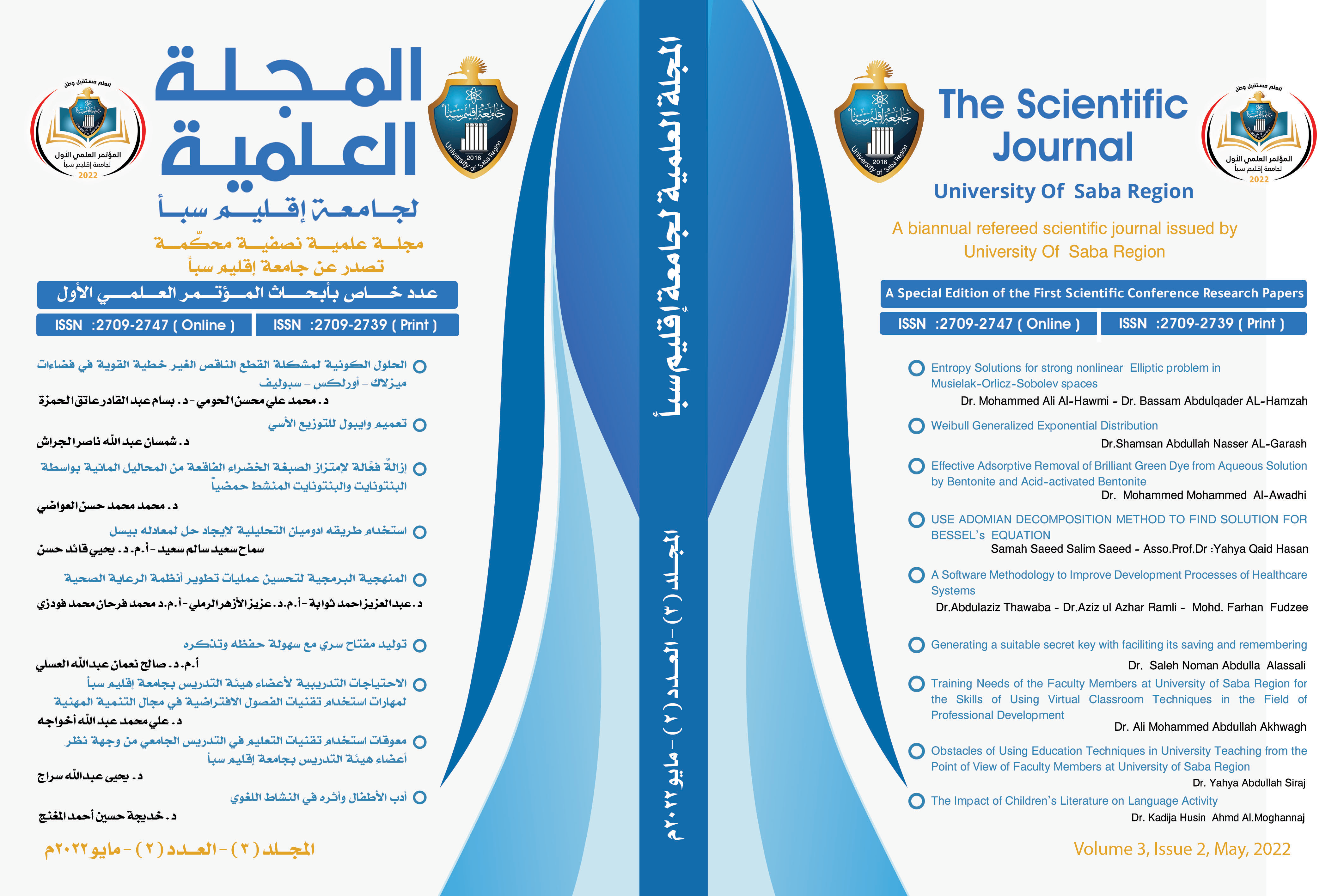
Training Needs of the Faculty Members at University of Saba Region for the Skills of Using Virtual Classroom Techniques in the Field of Professional Development
DOI:
https://doi.org/10.54582/TSJ.2.2.24Keywords:
Virtual, Training needs, Professional Development, ClassroomsAbstract
The aim of the research is to identify the training needs of the faculty members at the University of Saba Region for the skills of using virtual classroom techniques in the field of professional development. For achieving this objective, the researcher identified Zoom and Google Meet technology, as they are the most widely used in professional development programs offered through virtual classrooms at the present time. The researcher prepared a list of skills for using these technologies, which consists of (31) skills for using Zoom technology and (25) skills for using Google Meet technology. It was introduced as a list of needs and distributed on a random sample of (92) of the faculty members from all the university colleges, which represents (40%) of the original community. The results showed that there is a great need for the most of the skills of using virtual classroom techniques specified in this research. They showed a great need for (25) skills of using Zoom technology, which represents (81 %) and (6) only skills were needed to a medium degree. As for Google Meet technology, the results showed a great for (22) specific skills, which represents (88%), and only (3) skills were medium. Through the overall results, it is clear that there is a great need for skills of using virtual classroom techniques in the field of professional development for the faculty members at the University of Saba Region, which require training the faculty members on the skills of using virtual classroom techniques identified in this research.
Downloads
Published
How to Cite
Issue
Section
License
Copyright and Licensing
This journal publishes all scientific materials under the Creative Commons Attribution 4.0 International (CC BY 4.0) , license, which grants you the following permissions:
You are free to:
- Share — copy and redistribute the material in any medium or format for any purpose, even commercially.
- Adapt — remix, transform, and build upon the material for any purpose, even commercially.
- The licensor cannot revoke these freedoms as long as you follow the license terms.
Under the following terms:
- Attribution — You must give appropriate credit , provide a link to the license, and indicate if changes were made . You may do so in any reasonable manner, but not in any way that suggests the licensor endorses you or your use.
- No additional restrictions — You may not apply legal terms or technological measures that legally restrict others from doing anything the license permits.
Notices:
You do not have to comply with the license for elements of the material in the public domain or where your use is permitted by an applicable exception or limitation .
No warranties are given. The license may not give you all of the permissions necessary for your intended use. For example, other rights such as publicity, privacy, or moral rights may limit how you use the material.